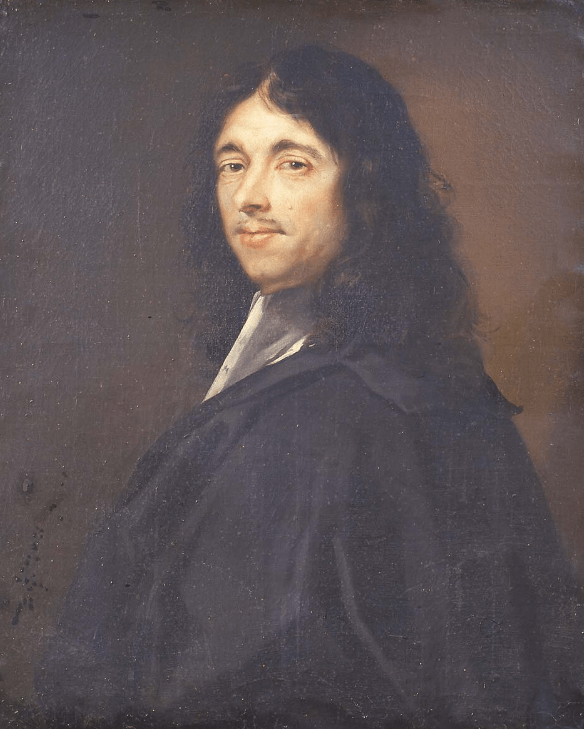
Source: Wikipedia
“I have discovered a truly remarkable proof which this margin is too small to contain.”
— Pierre de Fermat
Fermat’s Last Theorem is probably the perfect example for discussing the question: which matters more — the conjecture, or the proof? The theorem may not be as consequential as Fermat’s contributions to probability, differential calculus, analytic geometry, or modern physics. But it has kept attracting mathematicians — and, more broadly, people — for over three hundred years. That persistence deserves an explanation.
Why Does It Keep Attracting People?
“I confess that Fermat’s Theorem as an isolated proposition has very little interest for me, because I could easily lay down a multitude of such propositions, which one could neither prove nor dispose of.”
— Carl Friedrich Gauss
Clearly, not all unproved conjectures have received the same attention as Fermat’s Last Theorem, and this particular theorem was probably never going to provide the answer to the ultimate question of the universe. It is not even, arguably, the most important result of Fermat himself. So why this theorem? Why has it drawn so many minds for so long?
The first answer may be the simplest: it is easy to understand. Even people without formal mathematical training can grasp what it claims. And when you combine the statement with Fermat’s legendary anecdote — the margin too small — it becomes something almost social: a good story to enliven a mundane afternoon, whether you are at a party or sitting on a street corner.
Imagine the following conversation:
“Hey mate, how you doing?”
“Good, what are you up to?”
“I’m thinking about an interesting question.”
“What’s the question, then?”
“Ah, once there was a guy named Fermat. He argued that if n is a whole number bigger than 2, then a certain equation has no whole number solutions.”
“Wow, that’s deep, man. Did he say why?”
“He said the space was too small to write his remarkable answer.”
“Ah… that sounds like a tease… don’t you think?”
“Who knows. He once said he could provide the proof, but he had to feed the cat.”
“HAHAHA, that’s true. What can be more important than your cat?”
“Hahahahaha, can’t agree more!”
The straightforwardness of the statement may explain why this problem became popular among the general public, mathematicians included. But there is something more. Fermat’s other theorems had, one by one, surrendered to mathematical proof. This one resisted every assault. The desire to conquer the unconquered, to achieve what seems impossible — that impulse may be rooted in human nature itself. We want to do what others could not. And the stunning contrast between the simplicity of the question and the difficulty of answering it makes the challenge all the more seductive.
Which Is More Important — the Conjecture or the Proof?
Fermat’s Last Theorem offers a compelling case that an interesting conjecture, even without a solid proof, can be profoundly important in its own right.
Over three centuries, the desire to prove this single claim motivated mathematicians to enrich the concept of integer numbers, to extend the reach of the infinite descent method, to develop imaginary numbers and group theory, to prove the Taniyama–Shimura conjecture, to deepen the study of elliptic partial differential equations, and to bring differential geometry into number theory. It triggered the birth of Kummer’s ideal number theory and led to the Mordell conjecture.
Whether the remarkable proof Fermat claimed to possess ever truly existed remains unknown. But the process of searching for it has been spectacular enough. The story of this proof is a testament to the interconnectedness of mathematical discovery — a case where the peripheral discoveries may ultimately matter more than the theorem itself.
Finding conjectures is sometimes like making leaps. Perhaps the geniuses are the ones most prone to the wildest ones. Building proofs, by contrast, is like inspecting and constructing the land you have jumped to. It is only possible if someone managed to get there first.
Xinyue Cai
September 16, 2022
Categories List
- Letters to Julia (2)
- Lives of Mathematicians (6)
- Speeches (3)
 I Know That I Know Nothing
Leave a comment