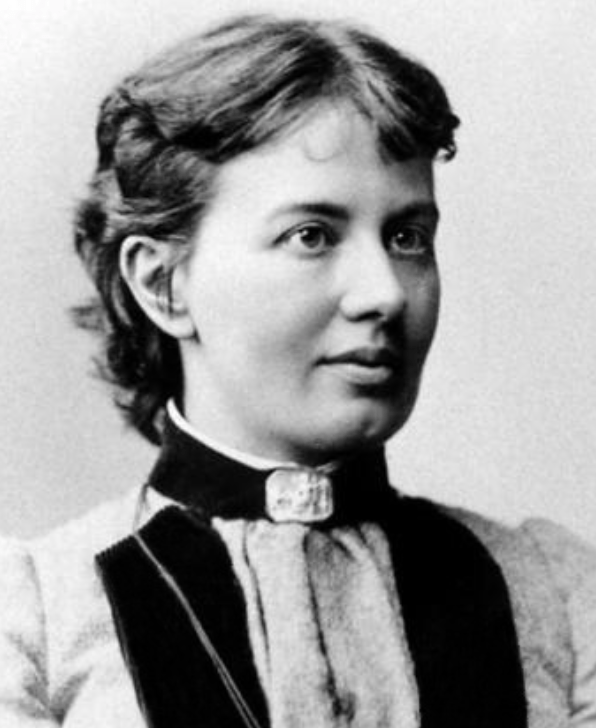
Sofia Kovalevsky (Source: Wikipedia)
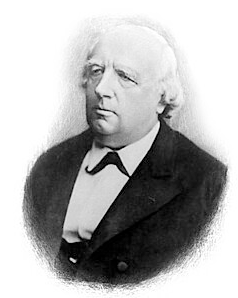
Karl Weierstrass (Source: Wikipedia)
“Intelligence is the ultimate aphrodisiac.”
— Timothy Leary
It is clear that Weierstrass held a deep love for Sofia — the kind that overtakes a person entirely. Here was a man who had once maintained that women were not suited for mathematics, yet who described Sofia as his most gifted disciple and remained close to her until she died. In a letter, he wrote to her: “Never have I found anyone who could bring me such understanding of the highest aims of science and such joyful accord with my intentions and basic principles as you!” To him, Sofia was a soulmate. And if we accept that the mind can be its own kind of attraction — that intellectual resonance can shade into something physical — then it is reasonable to suspect that his feelings extended beyond the purely cerebral. The fact that Weierstrass burned all the letters she had sent him after her death only deepens this impression. That is not the act of a detached mentor. That is the act of a man protecting something sacred, or grieving something that cannot be shared.
That Sofia loved Weierstrass in return seems clear enough. At the very least, he meant a great deal to her. But whether she loved him as a woman loves a man — whether this was romance, or something adjacent to it — is harder to say. Several things give me pause. Sofia and Vladimir became a real couple upon returning to Russia in 1874. After Vladimir’s death in 1883, she fell in love with Maxim Kovalevsky in 1889. If the love between her and Weierstrass was truly romantic, why did she not return to him — or at least draw closer — once she was free?
In the biography Anna Leffler wrote of Sofia, she observed that fulfilled love was, in Sofia’s view, a woman’s supreme goal in life — and that this was precisely what Sofia never achieved, despite it being her greatest desire. If that is true, then it is difficult to argue that Weierstrass was the answer to that longing. Perhaps, honestly, she did not find him attractive in the way that sustains romantic love over time. Or perhaps what they shared was something that does not fit neatly into the categories we have for love.
This raises what may be one of the most fundamental philosophical questions about love: is true love exclusive? Can one person fall in love with multiple people at the same time — and can those loves be different in kind without any of them being false?
In the end, the love story between Sofia and Weierstrass is a sad one. It seems that Weierstrass never received from Sofia the depth of feeling he offered her — whether because she chose to withhold it or because it was simply not hers to give. Some of the most meaningful bonds in a life are the ones that remain slightly unrequited — close enough to feel like everything, distant enough to ache.
Xinyue Cai
December 3, 2022
Categories List
- Letters to Julia (2)
- Lives of Mathematicians (6)
- Speeches (3)
 I Know That I Know Nothing
Leave a comment